Finding the right hotel, villa, or resort can set the tone for an entire trip. Unfortunately, scammers know travelers are searching for good locations, beautiful properties, and limited-time bargains.
Fake hotel pages, copied resort photos, fraudulent booking discounts, and payment-verification links can turn an exciting trip into an expensive problem. The safest approach is simple: verify the property independently and never rush into an off-platform payment.
Hotspots of Hotel Booking Scams in Asia
Fake accommodation booking scams have been reported in several Asian tourist destinations. The pattern is usually the same: scammers impersonate a real hotel or resort, advertise an unusually attractive rate, request a deposit, then disappear after payment.
Vietnam: Da Nang, Nha Trang, Phu Quoc, Sa Pa, and Ninh Binh
Vietnamese authorities have warned about fake hotel and resort fan pages impersonating genuine properties in Da Nang, as well as tourist destinations including Nha Trang, Phu Quoc, and Sa Pa. The pages may copy a real hotel’s name, logo, photos, and description, then run social-media promotions advertising heavily discounted rooms.
Victims are often asked to send a deposit—sometimes 30% to 50% of the reservation price—to a personal bank account. Once the money is sent, the fake page may disappear and the contact number may stop working.
Vietnam’s National Authority of Tourism has also warned about fake hotel and resort pages used to collect fraudulent booking deposits. One reported case involved a fake Facebook page impersonating Minawa Kênh Gà Resort in Ninh Binh, where a victim was manipulated into sending repeated “verification” payments after the initial deposit.
For more details, see the Vietnam National Authority of Tourism warning on online booking scams and the report on Da Nang Police warnings about fake hotel booking pages.
Thailand: Eastern Beach Provinces
Thai police have warned about fake social-media booking pages advertising discounted hotel rooms and pool villas. The warning came from Provincial Police Region 2, which covers eight eastern provinces, including Chon Buri, Rayong, Trat, and Chanthaburi.
The scam often begins with a heavily discounted hotel room or pool-villa offer. The traveler is told the promotion is limited and must be secured immediately with payment. After the transfer is sent, the scammer blocks the victim or deletes the page.
Thai police reported that fake service-booking pages represented a substantial share of cybercrime reports received during the period cited in their warning. That category covers more than hotel bookings alone, but the police warning specifically described fraudulent pages advertising hotel rooms and pool villas.
Read the Bangkok Post report on the Thai police warning.
How Fake Listing Scams Work
Hotel booking scams in Asia often begin with a convincing listing. Fraudsters may copy professional photos, descriptions, and property details from a real hotel, villa, or vacation rental, then use them on a fake website, Facebook page, Instagram account, or unofficial booking page.
Common warning signs include:
- A luxury property offered far below comparable local rates.
- A “limited-time” offer that requires immediate payment.
- A new social-media page with little genuine guest activity.
- A request to pay a deposit into a personal bank account.
- A hotel name, address, phone number, or website that cannot be independently verified.
- A host or “agent” who refuses to use a recognized booking platform or normal card-payment process.
The U.S. Federal Trade Commission warns that rental scammers often copy real listing photos and descriptions, then request advance payment through payment methods that can be difficult to reverse. Read the FTC’s guidance on rental listing scams.
The Payment-Link Phishing Trap
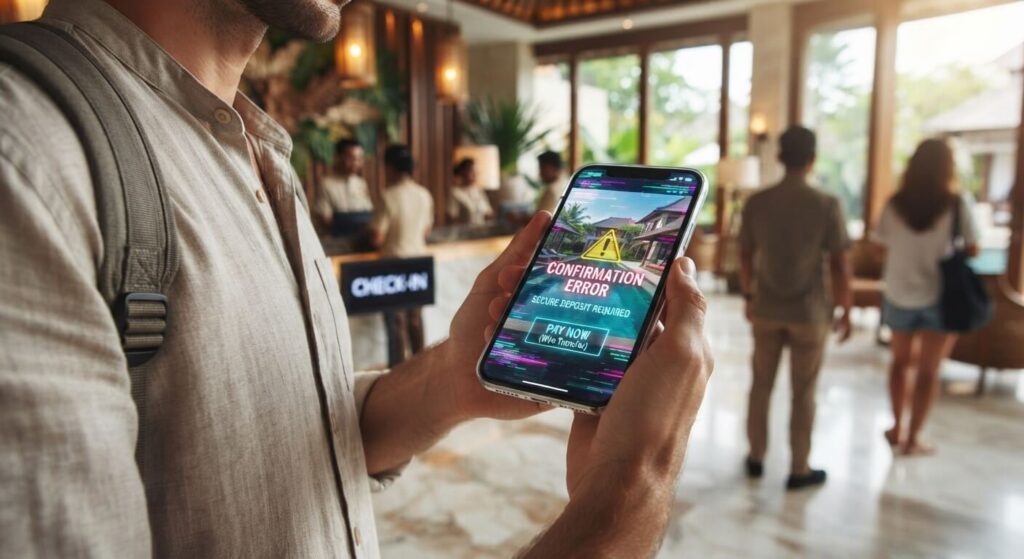
Not every accommodation scam begins with a fake property. In another version, criminals target a real hotel’s booking-platform account or use stolen reservation information to contact guests with genuine reservations.
The message may claim there is a payment error and that the reservation will be canceled unless the traveler re-enters card details immediately. It can look convincing because it may reference a real hotel, a real reservation, or a recognized booking platform.
The link, however, may lead to a fake payment page designed to capture card information.
Booking.com’s traveler safety guidance warns guests about urgent requests to provide or re-share payment information. Agoda has also warned hotel partners about cyberattacks in which criminals impersonate properties and send guests malicious payment links through booking-related communications.
How to Protect Yourself
Before booking or paying for a hotel, villa, apartment, or resort, use these checks:
- Verify the property independently. Find the official website, Google Maps profile, and phone number through your own search. Call a number you found independently—not one supplied in a suspicious message.
- Review social-media pages carefully. Check the account’s creation date, posting history, reviews, follower activity, and page-transparency details.
- Compare prices. If a luxury property costs dramatically less than similar nearby options, treat it as a warning sign.
- Avoid personal bank transfers. Do not send deposits to a personal account, cryptocurrency wallet, or unfamiliar payment service.
- Do not click unexpected payment links. Open the booking platform’s app or type its official web address yourself, then review the reservation in your account.
- Read the original booking terms. Confirm whether taxes, deposits, resort fees, or prepayments are listed. Be suspicious of a new payment request that does not match your reservation terms.
- Keep records. Save screenshots of the listing, messages, payment request, reservation confirmation, and payment receipt.
Quick Safety Checklist
Before sending money, ask yourself:
- Can I verify the property through an independently found website and phone number?
- Does the price make sense for the dates, location, and quality of the property?
- Is the seller asking me to transfer money to a personal bank account?
- Is the payment happening through the recognized platform’s normal checkout flow?
- Am I being pressured to pay immediately to avoid losing the room?
- Does the payment request match the charges disclosed in my original confirmation?
If something feels inconsistent, stop and verify before paying. Missing a discount is inconvenient. Paying a fake hotel page is far worse.