
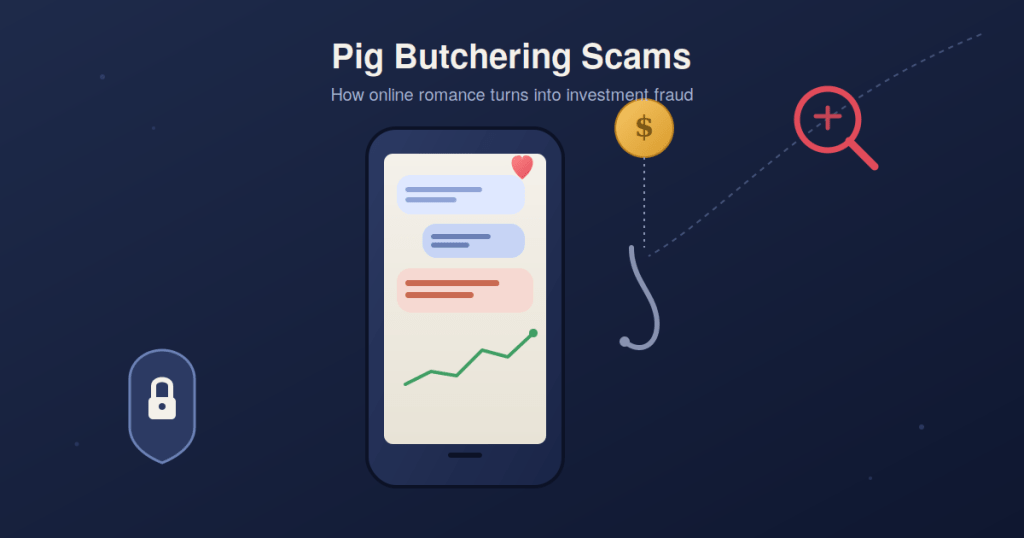
A stranger messages you. The conversation is warm and easy. Weeks pass, and you feel like you have found someone special. Then, almost casually, they mention an investment. This is how a “pig butchering” scam usually starts on dating websites.
What Is a Pig Butchering Scam?
The term comes from a Chinese phrase, sha zhu pan. It describes fattening a pig before slaughter. Scammers apply the same idea to people. They spend time building trust. Then they take everything they can.
The US Federal Bureau of Investigation (FBI) describes this as cryptocurrency investment fraud disguised as a friendship or relationship. Victims are coached to invest more and more money. Eventually, they cannot withdraw anything at all.
This scam blends romance fraud with investment fraud. It often starts on dating apps or social media. Sometimes it starts with a simple “wrong number” text. Either way, the goal is the same. Build a bond. Then exploit it.
Why Asian Dating Sites Are a Common Starting Point
Many pig butchering networks trace back to organized crime groups operating across Southeast Asia. The FBI notes that these scams first emerged in China and later spread through the region. Countries like Cambodia, Myanmar, and Laos have become operational hubs.
This matters for anyone using Asian dating platforms. Scammers often pose as successful, attractive profiles. They may claim to live abroad or work in finance. Some pretend to be temporarily unable to meet in person. This pattern shows up again and again in case reports.
The US Secret Service warns people to be cautious of romantic contacts met online who offer unsolicited financial or investment advice. That advice is one of the clearest warning signs available.
How the Scam Unfolds
The pattern is fairly consistent across countries.
First comes contact. A match on a dating app, or a message that seems accidental. The scammer is patient and attentive.
Next comes trust-building. This can last weeks or months. The scammer shares details about their life, sometimes fabricated stories of hardship or success. A real emotional bond starts to form.
Then comes the pivot. The conversation shifts toward crypto trading or another investment opportunity. The scammer often claims to have made money this way and offers to help.
Finally comes the loss. The victim is guided to a fake trading platform. Early balances look promising, encouraging larger deposits. When the victim tries to withdraw funds, they cannot. The scammer disappears.
The Scale of the Problem
This is not a small or isolated issue. It has become one of the most damaging fraud categories tracked by regulators.
In the United States, the Secret Service has identified pig butchering as causing billions of dollars in consumer losses each year. The US Treasury Department has also linked these operations to networks laundering billions of dollars in illicit proceeds.
Australia has seen the same trend. The Australian Competition and Consumer Commission, through its Scamwatch and National Anti-Scam Centre programs, uses the term “romance baiting” to describe this crossover between romance fraud and investment fraud. The Australian Federal Police has also issued public warnings, noting that scammers often flaunt a lavish lifestyle before introducing an investment pitch.
The United Kingdom has taken a similar view. UK authorities recently joined US agencies in a coordinated action against scam compounds in Southeast Asia, describing the operations as ones where victims are groomed through fake relationships before being tricked into fraudulent crypto platforms.
Behind many of these operations are trafficked workers, forced to run scams under threat. Governments increasingly frame this as both a financial crime and a human rights issue.
Warning Signs to Watch For
A few patterns show up consistently:
Someone you have never met in person avoids video calls or always has an excuse.
The relationship moves quickly from a dating app to a private messaging app.
Financial success comes up early and often, even without prompting.
You are encouraged to move money into a crypto platform you cannot independently verify.
Early “returns” appear on screen, encouraging larger deposits.
Any request to withdraw funds is met with delays, fees, or excuses.
What to Do If You Suspect a Scam
Stop sending money immediately. Do not send more to “unlock” or “unfreeze” an account, no matter what you are told.
Contact your bank or crypto exchange right away. In the US, reports can be filed with the FBI’s Internet Crime Complaint Center and the FTC. In the UK, Action Fraud is the reporting channel. In Australia, Scamwatch and ReportCyber both accept reports.
Talk to someone you trust before making any investment recommended by an online contact. This single step stops many scams before they cause real damage.
Final Thoughts
Pig butchering scams work because they exploit something real: the human desire for connection. Recognizing the pattern early is the best protection available. If an online relationship starts pointing toward an investment opportunity, slow down, ask questions, and verify independently before sending a single dollar.