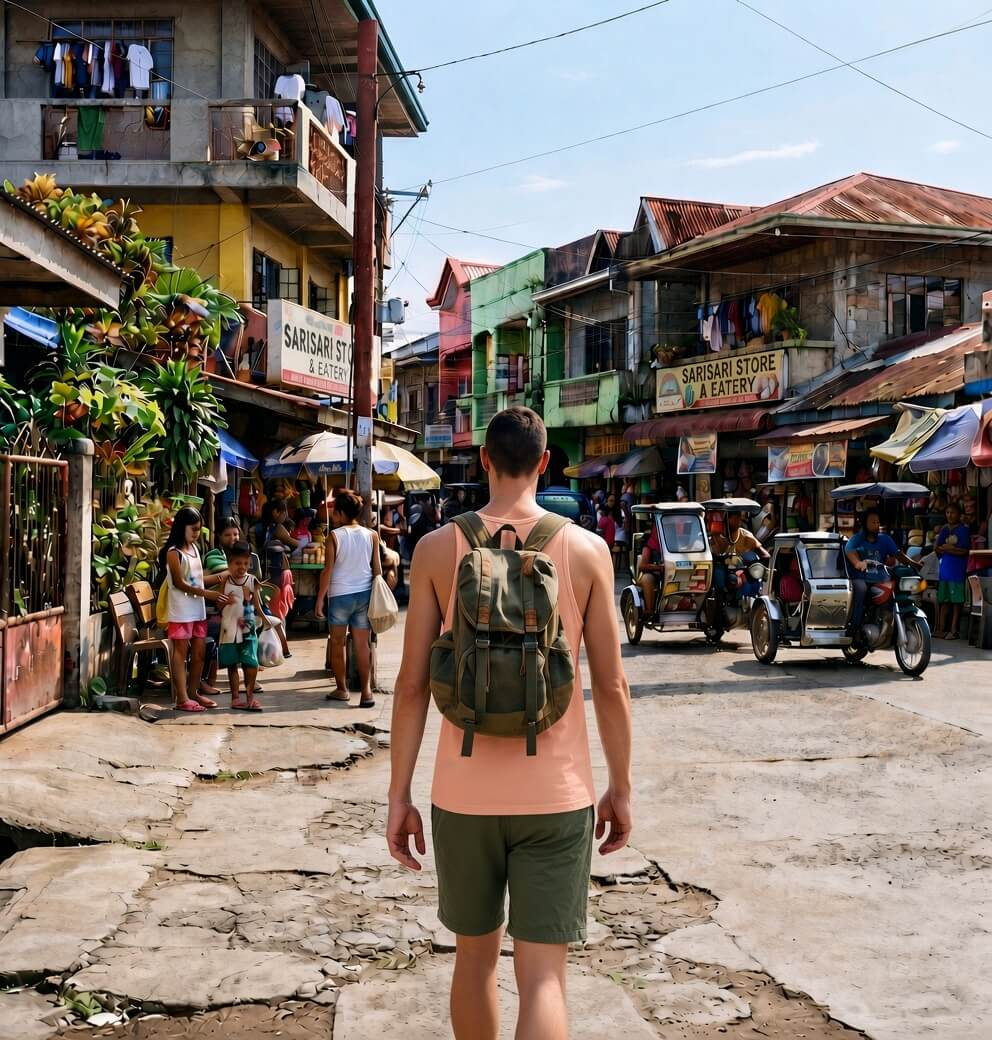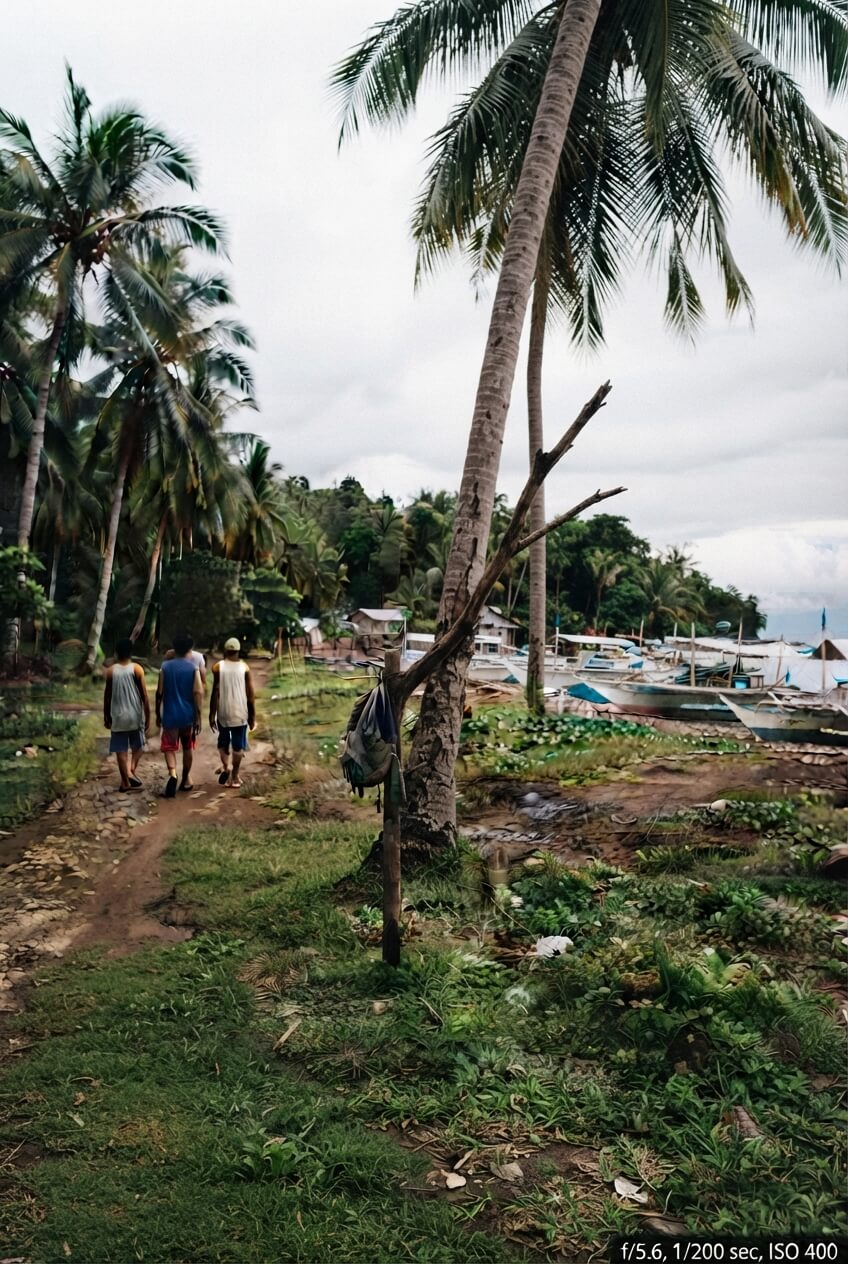
Elliot Eastman was a 26-year-old American from Vermont who moved to the Philippines, married a Filipina, and began building a life in a community in Sibuco, Zamboanga del Norte. On October 17, 2024, armed men reportedly posing as law-enforcement personnel entered his residence. Eastman resisted and was shot before being taken away by boat. Philippine authorities later said they believed he died the night of the abduction, although his body was never publicly recovered.
His case is tragic, and it should not be used to stereotype Filipino women, Filipino families, the Philippines, or international relationships generally. Millions of cross-cultural relationships are real, healthy, and lasting.
But Eastman’s disappearance does offer difficult, practical lessons for Western men who are thinking about dating, marrying, or relocating to the Philippines.
Dating abroad can be rewarding. Moving abroad is a much larger decision. A serious relationship is not the same thing as understanding a town, a province, local social dynamics, financial risks, security conditions, or the people around a partner.
What happened to Elliot Eastman?
Eastman was an American content creator from Vermont who had posted videos about his life in the Philippines. He had married a Filipino woman and was living in Sibuco, a municipality in Zamboanga del Norte.
On October 17, 2024, four armed men reportedly entered his residence while presenting themselves as law-enforcement personnel. Police said Eastman resisted and was shot in the leg before being taken away by motorboat. GMA News reported that the U.S. Embassy was working with Philippine authorities during the search.
The FBI also became involved at an early stage. FBI agents reportedly visited Eastman’s wife and were looking into the abduction, although Philippine police said the FBI was not taking part in the Philippine investigation.
Several suspects were detained during the investigation. In January 2025, authorities announced the arrest of a man they described as the alleged mastermind. The Philippine News Agency reported that Jackaria Jamani was arrested on a warrant for kidnapping and serious illegal detention.
Philippine authorities had previously announced that they believed Eastman died on the night he was abducted and that his body had been dumped at sea. His body has not been recovered.
Those are the central public facts established through official statements and reputable reporting. Beyond them, readers should be cautious. Online discussion of the case has included rumors, theories, and claims about private relationships, money, relatives, motives, and personal disputes. Unless a claim comes from a credible news organization, official investigative statement, or court record, it should not be treated as established fact.
Dating abroad is different from relocating abroad
A man may meet a sincere, caring woman from another country and still be unprepared to build a safe life in her hometown.
That is not an insult to her or to her country. It is simply the reality of relocation.
When you move overseas for a relationship, you may be entering an environment where your partner understands the language, customs, family connections, transportation, local power structures, and informal rules far better than you do.
At first, that can feel reassuring.
Your partner may know where to shop, whom to call, what prices are normal, how transportation works, and how to handle everyday problems. But that same familiarity can make a foreigner overly dependent.
Dependence becomes risky when you have no independent access to information, housing, money, transportation, legal advice, medical care, or trusted contacts outside the relationship.
It becomes especially important in an isolated area, where you have limited language skills, do not understand local conflicts, or have no practical way to leave quickly.
A healthy relationship should not require you to surrender your independence.
Research the exact place—not only the country
“The Philippines” is not one uniform travel or security environment.
Conditions can differ substantially among Manila, Cebu City, Angeles City, Dumaguete, Iloilo, Davao, resort areas, provincial cities, and isolated rural communities, particularly in the southern Phillippines.
The same principle applies throughout Asia. A man may read that a country is friendly, inexpensive, or popular with foreigners and assume that every town offers the same safety, infrastructure, medical access, legal support, and social environment.
That assumption can be costly.
The U.S. travel advisory currently places the Philippines at Level 2, or “Exercise Increased Caution,” because of crime, terrorism, unrest, and kidnapping. The advisory also identifies specific areas with substantially higher risks, including the Sulu Archipelago, Marawi City, and other parts of Mindanao.
That distinction matters. A man considering a move should not assume that conditions in one Philippine city necessarily tell him anything about conditions in a remote municipality elsewhere in the country.
Before relocating, research the specific city or municipality where you expect to live.
- Read the current U.S. travel advisory and pay attention to regional and province-level warnings.
- Learn how far the location is from a reliable hospital, airport, major city, police station, and U.S. consular assistance.
- Look at transportation options after dark, mobile-service reliability, internet access, roads, weather risks, and emergency services.
- Spend meaningful time in the area before committing to a lease, marriage, business, home purchase, or permanent move.
- Ask independent people—not only your partner or her relatives—what daily life is really like.
- Understand whether there are accessible legal services and safe short-term housing if you need to leave.
- Learn what emergency services are realistically available rather than assuming they will be comparable to those in the United States.
A low cost of living can be attractive, but it should never be the main reason to choose a remote or poorly understood location.
Keep financial independence
Eastman’s videos and contemporary reporting indicated that he had become involved in local business and money-related activities in the Philippines. Public reporting does not provide a complete, reliable account of his finances or establish that those activities caused or contributed to his abduction.
The broader lesson is more straightforward: informal financial arrangements can create stress and risk when a foreigner is new to a community.
Men relocating for love should avoid arriving with only enough money to get through the next month.
Financial stress can make a person more dependent on a partner or family, particularly if that person also controls housing, transportation, immigration paperwork, access to relatives, or local business opportunities.
Before you move, maintain:
- An emergency fund held in an account you alone control.
- A working bank card and backup payment method.
- Enough money for a last-minute flight, several weeks of accommodation, food, local transportation, and unexpected expenses.
- Scanned and physical copies of your passport, insurance information, banking contacts, and important documents.
- A separate phone number, email account, and cloud-storage account that only you can access.
- A realistic plan for earning legally or supporting yourself without depending on unverified local business promises.
Do not lend money casually.
Do not become the community lender because you have foreign income.
Do not invest in a friend-of-a-friend’s business simply because you feel pressure to prove generosity.
And do not confuse repeated requests for money with normal relationship support.
In a healthy relationship, financial boundaries should be possible without threats, guilt, anger, or sudden withdrawal of affection.
Do not become isolated
Many people who move abroad for a relationship make the same basic mistake: they build their entire life around one person and that person’s family.
They may live in a partner’s family home, rely on relatives for transportation, socialize almost exclusively with family members, work only with local acquaintances, and have no friendships or professional contacts outside that circle.
If a serious conflict develops, they may suddenly realize they have nowhere else to go and no neutral person to call.
Make an effort to build independent connections:
- Keep regular contact with family and trusted friends back home.
- Tell at least two people your real address and your local emergency contacts.
- Meet other foreigners, long-term residents, local professionals, and people who are not connected to your partner’s family.
- Learn enough of the local language to handle basic transportation, shopping, medical needs, and emergencies.
- Know where you could stay for a few nights if you needed privacy or distance.
- Keep your passport and key documents accessible—not stored with a partner, relative, landlord, or local acquaintance.
Independence does not mean distrust.
It means retaining the ability to make decisions freely.
Be careful what you reveal online
Publicly documenting an overseas lifestyle can create opportunities, but it can also expose a person’s routines, location, belongings, finances, arguments, and vulnerabilities.
This is particularly relevant for YouTubers, TikTok creators, bloggers, and other people who build an online audience around their lives abroad.
Do not casually post:
- Your exact home address or a recognizable exterior view of your residence.
- A predictable daily routine, including where you work, exercise, shop, or travel.
- Your cash, business revenue, loans, cryptocurrency, valuables, or personal wealth.
- Details about a relationship conflict, family disagreement, neighbor dispute, or local confrontation.
- Real-time location updates from remote areas.
- Private accusations about people in a small community.
A relationship or relocation video may feel like harmless content, but viewers can include people who know your area, your partner’s relatives, or the details of your daily life.
Protecting privacy is not paranoia. It is normal personal-security practice.
Pay attention to warning signs
Many difficult international relationships involve problems such as financial pressure, manipulation, isolation, dishonesty, immigration fraud, fake dating profiles, or escalating conflict around money and family expectations.
Take a pause if you notice any of the following:
- You are pressured to send money before meeting and independently verifying the person.
- Your partner discourages you from meeting friends, other foreigners, neighbors, or professionals outside her social circle.
- You are pushed to move quickly, marry quickly, purchase property, lend money, or start a business before you understand the situation.
- Your partner’s family assumes you will provide regular financial support and reacts angrily when you set limits.
- You feel unable to say no without risking threats, guilt, accusations, or sudden hostility.
- Stories about jobs, housing, children, debts, former partners, or emergencies keep changing.
- You are urged to surrender your passport, bank access, phone, or control of your travel arrangements.
- You are warned away from independent legal advice, medical care, or contact with your family at home.
None of these signs automatically proves bad intent.
But several appearing together should cause you to slow down and take a closer look.
A trustworthy partner should be able to accept reasonable boundaries, personal safety measures, and a gradual approach to major life decisions.
A better way to relocate for love
If you are serious about building a life in the Philippines or elsewhere in Asia, move in stages.
First, visit more than once.
Stay independently at a hotel, serviced apartment, or rental rather than immediately moving into a partner’s family home. Meet the woman in normal settings, meet important relatives gradually, and observe how money, conflict, work, and expectations are handled over time.
Second, learn what life looks like outside the romantic phase.
Spend time in the area during ordinary weekdays. Learn grocery prices, transportation options, medical access, weather realities, internet quality, visa requirements, and how far you are from major services.
Third, preserve an exit plan.
You should always be able to obtain transportation, communicate with people you trust, access your own money, and find safe temporary accommodation without anyone else’s permission.
Finally, distinguish affection from urgency.
A healthy relationship can survive a careful pace. Someone who genuinely wants a future with you should be able to respect your need to research, plan, maintain financial boundaries, and make major life decisions deliberately.
The real lesson
Elliot Eastman’s story is not proof that dating in the Philippines—or dating in Asia—is inherently dangerous.
It is not evidence that foreign men should fear Filipino women, avoid international relationships, or assume the worst about a partner’s family.
It is a reminder that romance does not eliminate the need for judgment.
A man can be deeply in love and still need independent money.
He can be happily married and still need a local safety plan.
He can be welcomed by a family and still need to understand the community around him.
He can enjoy a lower cost of living and still need to research security conditions, business risks, privacy, medical care, transportation, and emergency services.
International relationships can succeed without either person giving up independence.
If you are considering a serious relationship or a move abroad, take the romance seriously—but take your safety, finances, privacy, and ability to make independent choices just as seriously.
This article is for general informational purposes and is not a substitute for professional legal, immigration, financial, or security advice. Travel conditions and government advisories can change, so check current official guidance before making significant travel or relocation decisions.