Emergency Medical Disclaimer: This guide is compiled for educational and risk-mitigation purposes based on public health data. It does not constitute formal medical advice. If you or a travel companion are experiencing a medical emergency, seek immediate professional care at an international-standard hospital.
Most travelers assume that if they are drinking at an established bar or a highly rated hostel, the alcohol is safe. Following the tragic mass poisoning in Vang Vieng, Laos in November of 2024, which resulted in the deaths of six international tourists, it is vital to understand that this isn’t a simple case of a bad hangover. It is a critical, systemic travel safety hazard.
In major regional nightlife hubs, independent venue owners or illicit distributors sometimes cut costs by purchasing bootleg, counterfeit spirits. To mimic the taste and effects of ethanol cheaply, illegal distillers blend in industrial methanol—a toxic alcohol commonly used in antifreeze, solvents, and fuel.
According to investigative reports by the BBC, these toxic batches are often hidden inside house pours, communal punch bowls, and “free shots” designed to draw in young crowds. Because methanol looks, smells, and tastes exactly like standard alcohol, you cannot detect it with your senses. The margins are terrifyingly small: ingesting a tiny amount can cause permanent neurological damage, total blindness, or death.
High-Risk Zones: Where Poisonings Are Most Common
While counterfeit alcohol can technically appear anywhere with weak liquor regulations, global public health organizations and the UK government have warned that the risk is heavily concentrated in specific global regions and popular tourist hotspots.
1. Indonesia (The Highest Reported Incidents Globally)
Over the past two decades, Indonesia has recorded the highest number of reported methanol poisoning cases in the world. For travelers, the primary threat is concentrated in nightlife hubs like Bali, Lombok, and the Gili Islands.
- The Local Threat: The poisonings are frequently tied to bootleg local spirits known as Arak (a traditional spirit made from coconut flower, rice, or sugarcane) or mixed local street drinks called “Miras Oplosan” or simply “Oplosan.” Unlicensed bottle shops and beach bars frequently substitute cheap, industrial methanol into these mixtures to spike profits.
2. Laos (Backpacker Hubs)
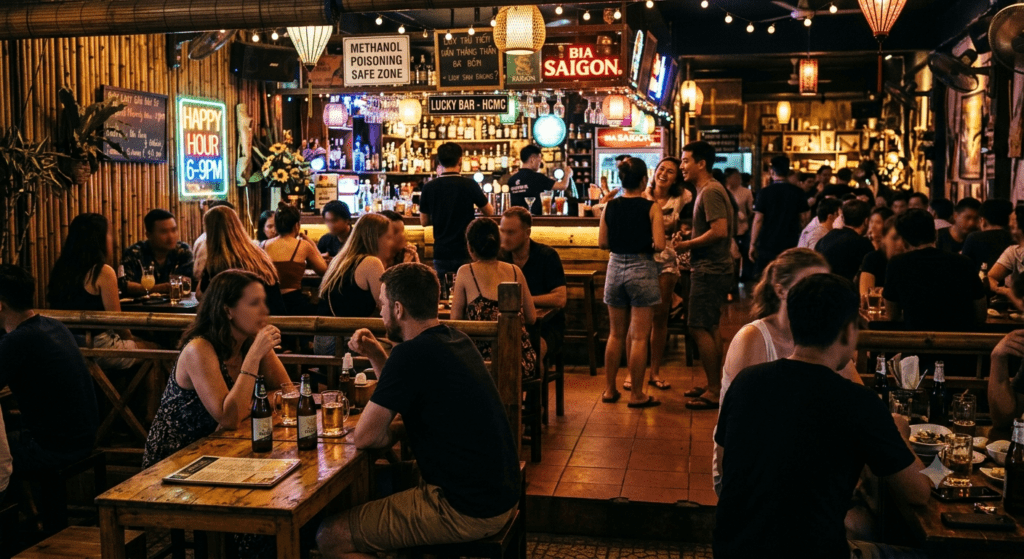
As the devastating Vang Vieng mass poisoning highlighted, Laos has become a high-risk flashpoint for young backpackers. The issue here is heavily concentrated around budget accommodations, popular party hostels, and bars along the river tubing routes where free shots, house vodka pours, and communal drink buckets are used as cheap promotions to draw in large crowds of solo travelers.
3. Vietnam, Cambodia, Malaysia, and the Philippines
- Vietnam: As one of the largest alcohol consumers in the region, an estimated 85 percent of the alcohol consumed in Vietnam is technically of homemade or unregulated origin. A lack of enforcement on counterfeit, adulterated commercial spirits makes the nightlife districts of major cities dangerous.
- Cambodia: Traditional home-distilled rice wines are deeply embedded in the culture, but rising production costs have led some illicit brewers to cut corners by replacing traditional wood-fired fermentation with toxic chemical mixers, leading to regular outbreaks.
- Malaysia and the Philippines: Both nations have seen severe, localized outbreaks tied to unregulated local or bootleg spirits. In the Philippines, mass casualties have historically been linked to poisoned batches of Lambanog (a traditional coconut palm wine), while Malaysia has issued multiple national health alerts following clusters of fatalities tied to cheap, counterfeit compound spirits sold in under-the-radar retail shops.
4. Global Flashpoints: Outside of Southeast Asia
Government travel agencies have significantly expanded their official safety advisories due to a global increase in contaminated alcohol cases. If you are a solo traveler heading out, global public health registries note that you must exercise extreme caution with spirits in India (where toxic bootleg liquor is known locally as “hooch”), Turkey (often involving counterfeit versions of the national drink, Raki), as well as parts of Mexico and Ecuador.
Critical Identification: Methanol Poisoning Symptoms to Watch For
Data published by Doctors Without Borders (MSF) notes that methanol poisoning is incredibly deceptive because its initial phase looks and feels exactly like standard alcohol intoxication. You will feel buzzed, relaxed, or unsteady, completely unaware that a volatile toxin is moving through your system.
The true danger begins 10 to 30 hours later once your liver begins breaking the chemical down into toxic formic acid. If you or anyone in your group experiences the following symptoms after a night of drinking, treat it as an absolute medical emergency:
Phase 1: The “Super Hangover” (Gastrointestinal & Neurological)
- Severe, Persistent Vomiting: Intense abdominal pain and vomiting caused by acute systemic toxicity, not just a standard upset stomach.
- Intractable Headache: A blinding, throbbing headache that does not respond to standard over-the-counter pain relievers.
- Neurological Disruption: Severe dizziness, profound confusion, or a lack of motor coordination that persists long after the alcohol should have left your system.
Phase 2: Visual Destruction (The Critical Indicator)
- Blurred or Doubled Vision: Slower tracking, difficulty focusing, or sudden blind spots.
- Extreme Photophobia: Pronounced sensitivity to light, causing physical pain.
- The “Snowfield” Effect: Experiencing flashes of light, tunnels of darkness, or a distinct sensation described as standing in a blinding snowstorm. Any changes to your vision are a definitive sign of acute optic nerve damage from formic acid.
Phase 3: Systemic Failure (Advanced Poisoning)
- Hyperventilation: Rapid, deep, labored breathing as the lungs desperately attempt to compensate for the massive buildup of acid in the blood.
- Cyanosis: Bluish skin, fingernails, or lips, indicating that the organs are being starved of oxygen.
- Severe Complications: Seizures, loss of consciousness, coma, or irreversible organ failure.
The Biological Timeline: What Happens to the Body
Methanol poisoning is a slow-motion medical emergency. When the human body breaks down methanol, it converts it into formaldehyde, which then rapidly turns into formate (formic acid).
While the initial concentration of methanol drops, the level of toxic formate steadily climbs. This accumulation causes severe metabolic acidosis—turning the blood highly acidic and starving vital organs of oxygen—while specifically destroying the cells of the optic nerve.
Tactical Rules for Surviving the Night Out
You cannot rely on a venue to guarantee your safety, and you cannot test a drink with your senses. To eliminate the risk, you must change how you drink when traveling through high-risk regions.
1. Watch the Seal Break on Import Brands
Avoid house mixes, pre-poured buckets, and free promotional shots. If you are ordering spirits, choose reputable, globally recognized import brands and physically watch the bartender break the factory seal on a fresh bottle. If they pour it from an open bottle stashed beneath the counter, switch to a different drink.
2. When in Doubt, Stick to Beer or Cider
Large-scale commercial breweries have massive quality control infrastructure and distinct packaging. It is economically impractical and incredibly difficult for counterfeiters to replicate sealed aluminum beer cans or commercially capped glass bottles. If you want to eliminate the risk of spirit-tampering entirely, stick to local, well-known bottled or canned beers.
3. Act Fast: The Critical Window
If you spot any of the symptoms listed above—especially visual disturbances—do not try to “sleep it off.” Seek emergency medical care at an international-standard hospital immediately.
As Doctors Without Borders notes, early medical intervention is absolutely critical. If administered in time, clinicians can introduce blocking agents (like fomepizole or, in emergency settings where specific antidotes are unavailable, clean medical-grade ethanol). This occupies the liver’s enzymes, stopping the conversion of methanol into toxic formic acid and buying vital time for the patient.
Grounded Awareness, Not Fear
Navigating international travel successfully isn’t about hiding in your hotel room; it’s about knowing where the real vulnerabilities lie and taking simple, tactical steps to mitigate them. By exercising caution in the nightlife scene of high-risk countries and sticking to sealed, verifiable beverages, you can enjoy the vibrant social scenes of Southeast Asia without becoming a statistic.